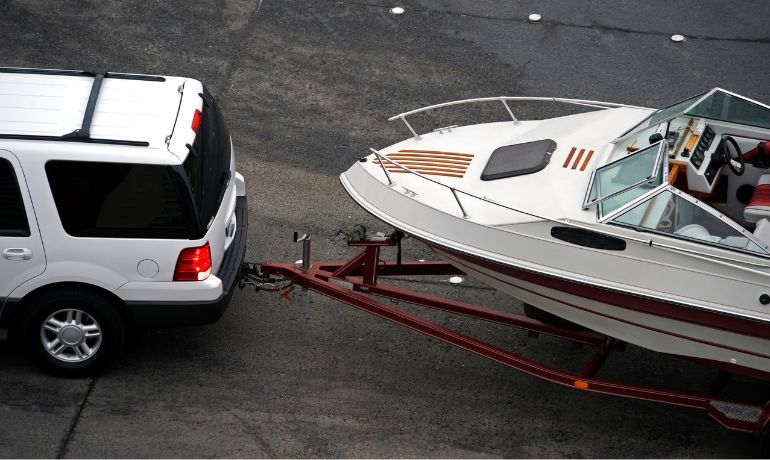
Summer in North Idaho means it’s time to load up the family, haul boats to the lake, campers to the mountains, and trailers packed with grown-up toys to wherever your weekend adventures take you. Whether you’re towing for work or recreation, however, doing it safely and confidently starts with understanding the basics.
At Mike White Ford, with showrooms in Coeur d’Alene and Sandpoint, we help drivers find the right vehicles and equipment for their towing needs. But before you hook up and head out, here’s what you need to know to tow safely this summer.
1. Know Your Vehicle’s Towing Capacity
The first and most important step is understanding how much your vehicle can safely tow. Every vehicle has a maximum towing capacity, which includes the weight of the trailer and everything loaded inside it. Key terms to understand:
- Towing Capacity: The maximum weight your vehicle can pull
- GVWR (Gross Vehicle Weight Rating): The total allowable weight of your vehicle and all cargo
- Tongue Weight: The downward force the trailer places on your hitch
Exceeding these limits can strain your engine, transmission, and brakes, and may lead to unsafe driving conditions, especially since people towing things like boats and campers often end up climbing up and descending down curvy mountain roads that might be unpaved for part of the trip. Always check your Ford owner’s manual or consult with our team at Mike White Ford to confirm your vehicle’s capabilities.
2. Choose the Right Hitch and Equipment
Not all hitches are created equal. Using the correct hitch setup ensures stability and safety while towing. Common towing equipment includes:
- Receiver hitch matched to your vehicle’s rating
- Ball mount and hitch ball sized for your trailer
- Weight distribution hitch for heavier loads
- Trailer brake controller for improved stopping power
Having the right setup can make a noticeable difference in handling and control especially on longer trips or on uneven terrain.
3. Load Your Trailer Properly
How you load your trailer has a big impact on how it tows. Poor weight distribution can lead to dangerous trailer sway that can lead to accidents and lost loads. Best practices include:
- Keep 60% of the weight toward the front of the trailer
- Maintain 10–15% tongue weight
- Secure all cargo to prevent shifting
- Avoid overloading one side
A well-balanced trailer improves stability and makes your drive much safer.
4. Check Your Tires and Brakes
Both your vehicle and your trailer need to be in top condition before towing. Before you go:
- Check tire pressure for all your tires on both your vehicle and trailer
- Inspect tread depth and look for damage or wear
- Test trailer brakes and connections
- Ensure all brake lights and turn signals are working on car and trailer
Towing puts extra stress on your tires and braking system, so these checks are essential for safe travel.
5. Adjust Your Driving Habits
Towing changes how your vehicle handles, accelerates, and stops. It’s important to adjust your driving style accordingly. Tips for towing safely:
- Allow for longer stopping distances
- Take turns wider and more slowly
- Avoid sudden acceleration or braking
- Use lower gears when driving on hills
- Keep speeds moderate to reduce sway
Patience and smooth driving are key when towing, especially on busy summer roads.
6. Use Ford’s Towing Technology
Many Ford trucks and SUVs are equipped with advanced towing features that make hauling easier and safer. Helpful features include:
- Pro Trailer Backup Assist™ for easier reversing
- Trailer Sway Control to help maintain stability
- Tow/Haul Mode for optimized performance
- Blind Spot Information System (BLIS®) with Trailer Coverage
These technologies are designed to give you more confidence behind the wheel, and are especially helpful if you’re new to towing.
7. Do a Final Walkaround Before You Leave
Before hitting the road, take a few minutes for a final inspection. Checklist:
- Hitch is securely locked
- Safety chains are attached
- Electrical connections are working
- Trailer lights are functioning
- Load is secure
This quick walkaround can help you catch small or overlooked issues, and can give you peace of mind when a tricky situation arises unexpectedly.
Tow with Confidence with Mike White Ford
Towing doesn’t have to be complicated, but it does require preparation. With the right vehicle, equipment, and knowledge, you can enjoy everything North Idaho has to offer this summer with confidence.
Mike White Ford offers a wide selection of Ford trucks and SUVs built for towing, along with expert guidance to help you get set up. Whether you’re new to towing or looking to upgrade your current setup, our team is here to help. Visit Mike White Ford in Coeur d’Alene or Sandpoint today to explore our inventory, get expert advice, and make sure you’re ready for your next summer adventure.