
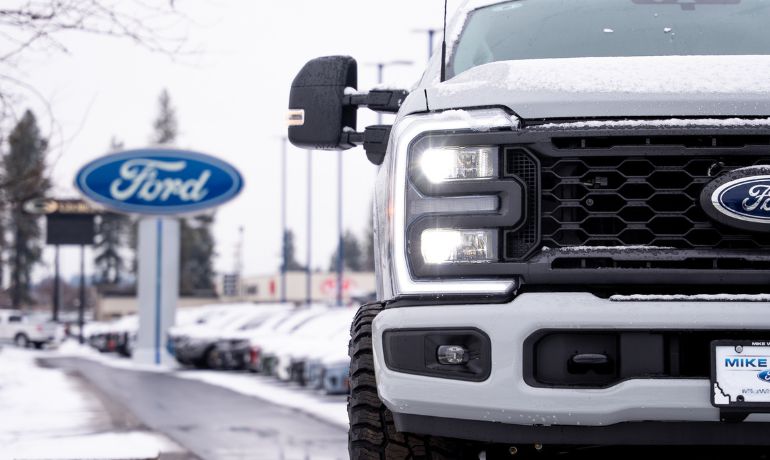
The holiday season is often a time that brings some of the most meaningful road trips of the year. Families pile in with luggage, food, and gifts for long drives across North Idaho and the Inland Northwest to gather with family and friends for Thanksgiving Dinner and Christmas celebrations. These journeys often mean fully loaded vehicles, excited kids, winter weather, winding highways, mountain passes, and shorter daylight hours. That’s not always a recipe for fun and adventure, but with a little preparation, you can make the trip safer, less stressful, and more enjoyable for everyone.
At Mike White Ford in Coeur d’Alene and Sandpoint, we want our customers to arrive at their destinations and return home safely with a lot of good memories, not hardship stories. So here are some practical tips tailored to help you get ready to face the unique challenges of holiday road travel in our region.
1. Start with a Thorough Vehicle Check
Giving your vehicle a solid once-over before any long trip is always a good practice, but it is especially important in winter in the Inland Northwest. The last thing you want is to get stranded or have to change a tire on an isolated, snow-covered road with darkness rapidly descending. (Better yet, schedule a pre-trip inspection with our service team.) Key items to check include:
- Tires: Confirm proper inflation (including the spare) and adequate tread depth. Cold temperatures lower tire pressure, and worn tires lose grip quickly on snow or ice.
- Brakes, battery, and fluids: Ensure brakes feel firm, the battery is strong (cold weather is hard on batteries), and all fluid levels—oil, coolant, washer fluid, and brake fluid—are correct.
- Lights and wipers: Test headlights, taillights, turn signals, and hazard lights. Replace worn wiper blades and keep the washer reservoir full with winter-formula fluid.
- Four-wheel or all-wheel drive systems: If your Ford is equipped with 4WD or AWD, make sure it is functioning properly. These systems provide a significant safety advantage on slick or snowy roads.
A quick service visit can catch small issues before they become roadside problems hundreds of miles from home.
2. Pack Smart and Secure Everything
Holiday vehicles are often packed tightly with luggage, gifts, coolers, and gear. Loose items can become dangerous projectiles in a sudden stop. When packing up suitcases, boxes, and everything else, follow these pointers:
- Place heavier items low and close to the center of the vehicle.
- Secure cargo with straps or bungee cords so nothing shifts during hard braking or on winding roads.
- Keep the rear and side windows and mirrors clear for full visibility.
- Leave sufficient space for passengers to sit comfortably and be able to buckle up properly; never let luggage interfere with seat belts or airbags.
If you are towing a trailer or carrying rooftop cargo, double-check weight limits and that they are adequately secured. For a trailer hitch you may not use very often, make sure you know how to connect and disconnect the trailer and electrical before the day of travel.
3. Plan for Winter Weather and Shorter Days
November and December in North Idaho and the surrounding region often bring snow, ice, and freezing rain, and the daylight hours up here get very short very fast. When planning, build extra prep and travel time into your schedule so you never feel rushed.
- Check road conditions and weather forecasts the night before and the morning of your trip. If you are traveling on unfamiliar roads, decide if you are comfortable with them if they are winding or steep, and check to see if any roadwork is being done on them before hitting the road.
- Carry winter emergency supplies: ice scraper, brush, small shovel, traction aids, blanket, extra warm clothing, flashlight, water, snacks, and a portable phone charger.
- Drive with headlights on whenever visibility is reduced. In low light or falling snow, slow down and increase following distance significantly.
- Watch for black ice on bridges, shaded curves, and overpasses; these are common hazards on hilly and mountain routes.
If conditions deteriorate, it is always safer to delay the trip or stop for the night than to push through dangerous weather.
4. Keep Kids Safe and Comfortable
Long drives with children require extra planning.
- Use the correct car seat or booster for each child’s age, height, and weight, and install it properly every time.
- Look at your route map and schedule regular stops every two or three hours at safe locations for stretching, bathroom breaks, and a chance to move around.
- Pack entertainment, snacks, and water within easy reach of the back seat.
- Never leave children (or pets) unattended in a parked vehicle, even for a short time.
- Make sure every passenger is buckled before the vehicle moves.
- Get adequate sleep the night before the drive so that you are rested, patient, and alert on the road.
A calm, well-rested driver and properly restrained passengers form the foundation of a safe family trip.
5. Drive Defensively and Stay Alert
Fatigue is a major risk on long holiday drives. Share driving duties when possible, and stop if you feel drowsy either to take a short break or to switch drivers. Don’t rely solely on caffeine to keep you awake; fatigue does not just make you sleepy, but can slow your reactions and inhibit awareness of your surroundings.
- Maintain a safe following distance, especially when roads are wet, snowy, or crowded with other holiday travelers.
- Use cruise control only in good conditions; turn it off on slippery or winding roads.
- Watch for wildlife, particularly at dawn and dusk when visibility is low and animals are more active.
- Stay patient if you encounter congested traffic; holiday congestion and slower-moving vehicles are common and aggressive maneuvers increase risk. If feasible, time your trip so that you do not travel in populated areas during prime driving hours.
Modern Ford safety technologies such as Automatic Emergency Braking, Blind Spot Monitoring, Lane-Keeping Assist, and available adaptive cruise control can provide valuable support, but they are designed to assist rather than replace an alert driver.
6. Prepare an Emergency Kit and Communication Plan
In addition to winter gear, carry a basic emergency kit with:
- First-aid supplies, including any necessary medications
- Jumper cables
- Reflective triangle, vest, and flares
- Phone charger or power bank
Before leaving, let someone know your planned route and expected arrival time. If you experience trouble, pull well off the roadway, turn on your vehicle’s hazard lights, and call for help. Ford’s available roadside assistance and the Ford app’s vehicle location features can be invaluable in these situations.
A Final Word from Mike White Ford
Safe holiday travel starts with a reliable, well-maintained vehicle and a thoughtful plan. Whether you drive a sporty Bronco, a versatile Explorer, a capable F-150, or another Ford model, taking time for preparation pays off in reduced stress, greater safety, and a much more enjoyable road trip. Holidays should be a time for celebration, relaxation, and reconnecting with loved ones, so take prudent steps to make sure those are the memories you will keep with you this season.
If your vehicle is due for service, a tire check, or a full pre-trip inspection, we invite you to visit Mike White Ford in Coeur d’Alene or Sandpoint. Our service team can help get your Ford ready for the miles ahead so you can focus on the people waiting at the other end of your journey.
Mike White Ford wishes you safe travels, warm gatherings, and a wonderful holiday season. Drive carefully, arrive safely, and enjoy every mile with the ones who matter most.